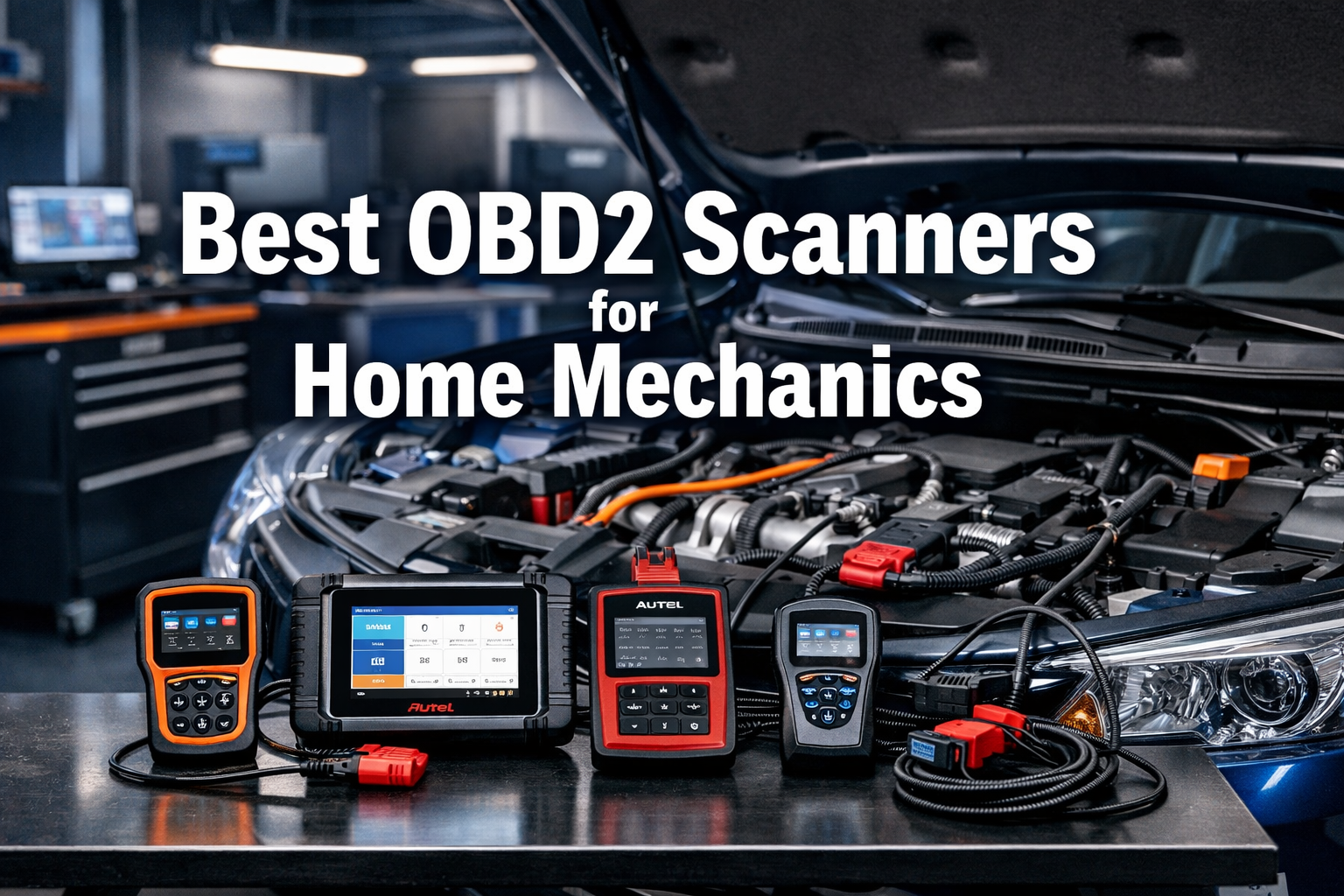
When your car’s check engine light comes on, you’ve got two choices… pay the garage for a diagnostic session or invest in one of the best OBD2 scanners for home mechanics and take control of your vehicle’s health monitoring. For anyone serious about understanding what’s happening under the bonnet, the right diagnostic tool transforms guesswork into proper fault analysis.
Key Takeaways
• Professional-grade scanners like the Foxwell NT726 offer comprehensive system coverage beyond basic engine codes
• Bluetooth OBD2 adapters provide excellent value for occasional users who prefer smartphone interfaces
• Live data capability is essential for diagnosing intermittent faults that don’t trigger stored codes
• Vehicle compatibility varies significantly… always verify protocol support for your specific make and model
• Investment in quality tools pays dividends through faster diagnosis and reduced garage visits
Quick Picks: Best OBD2 Scanners for Home Mechanics
🏆 Best Overall
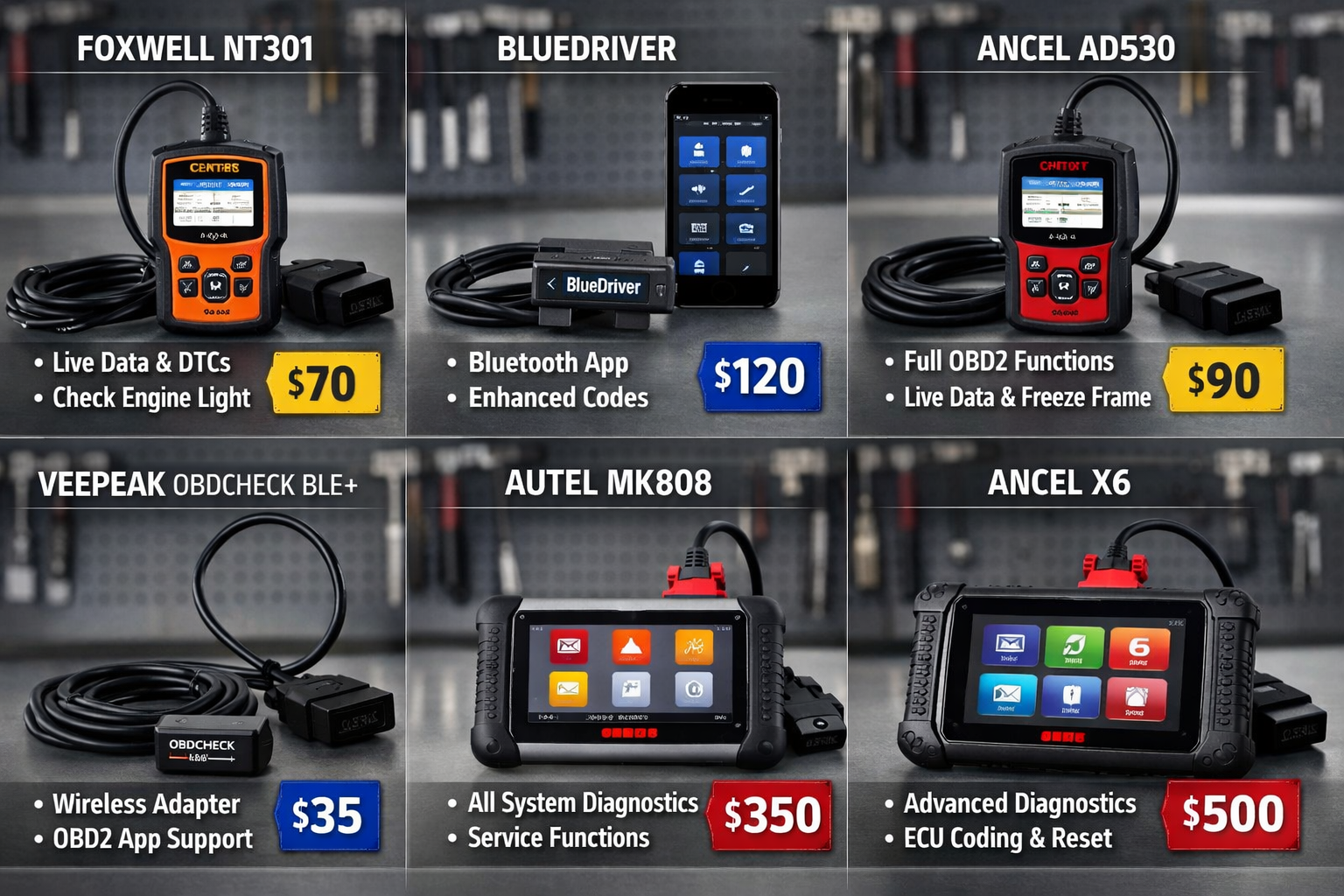
Foxwell NT726 – Comprehensive all-systems scanner with bidirectional controls and regular updates. Handles everything from engine management to TPMS resets.
💰 Best Budget
Ancel AD410 Pro – Solid basic scanner that covers essential OBD2 functions without unnecessary complexity. Perfect for occasional fault code reading.
📊 Best for Live Data
Launch CRP123X Elite – Exceptional real-time data streaming with graphing capabilities. Ideal for tracking sensor performance and intermittent issues.
🔰 Best for Beginners
Foxwell NT301 – Simple interface with clear fault code explanations. No technical jargon… just straightforward diagnostic information.
What Actually Matters for DIY Users
Compatibility: More Complex Than You’d Think
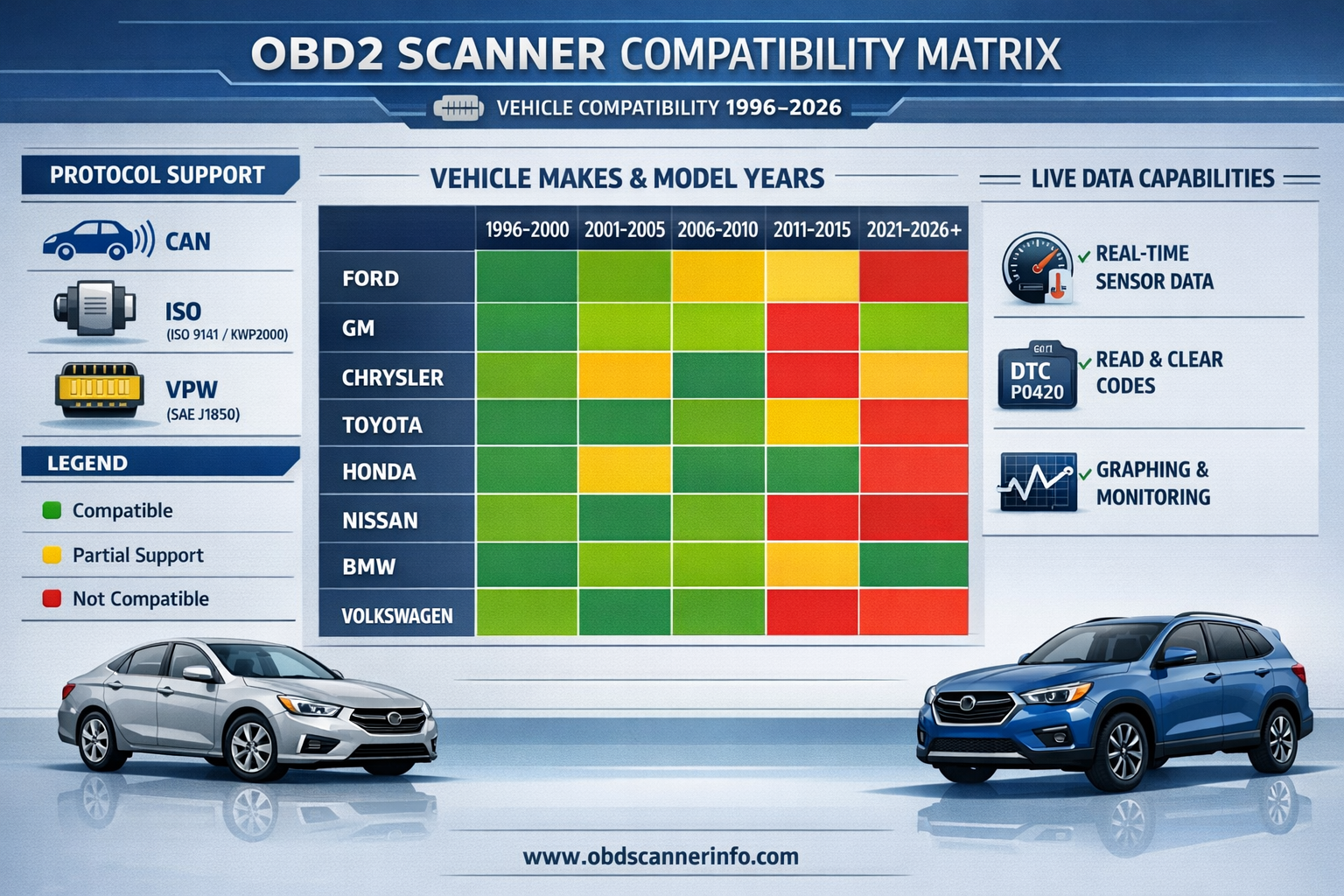
Here’s how it works… every vehicle sold in Europe since 2001 (petrol) and 2004 (diesel) includes mandatory OBD2 compliance. But compatibility isn’t just about the diagnostic port. Different manufacturers implement various communication protocols, and not every scanner speaks every language.
Protocol Support Essentials:
- CAN (Controller Area Network): Standard on vehicles from 2008 onwards
- ISO 9141-2: Common on European vehicles 1996-2008
- KWP2000: Volkswagen Group and some Asian manufacturers
- VPW/PWM: Primarily American vehicles, less relevant for UK market
In practice, this means checking your vehicle’s specific requirements before purchasing. A comprehensive diagnostic tool review can help identify which protocols your target scanner supports.
Live Data, Freeze Frame, and Readiness Monitors
Live data capability separates basic code readers from proper diagnostic tools. When chasing intermittent faults, stored codes only tell part of the story. Real-time sensor readings reveal what’s actually happening during fault conditions.
Freeze frame data captures the exact operating conditions when a fault occurred… engine RPM, coolant temperature, fuel trim values, and more. This snapshot often pinpoints the root cause faster than the fault code alone.
Readiness monitors indicate whether your vehicle’s emission control systems have completed their self-tests. Essential for MOT preparation and confirming repairs have resolved underlying issues.
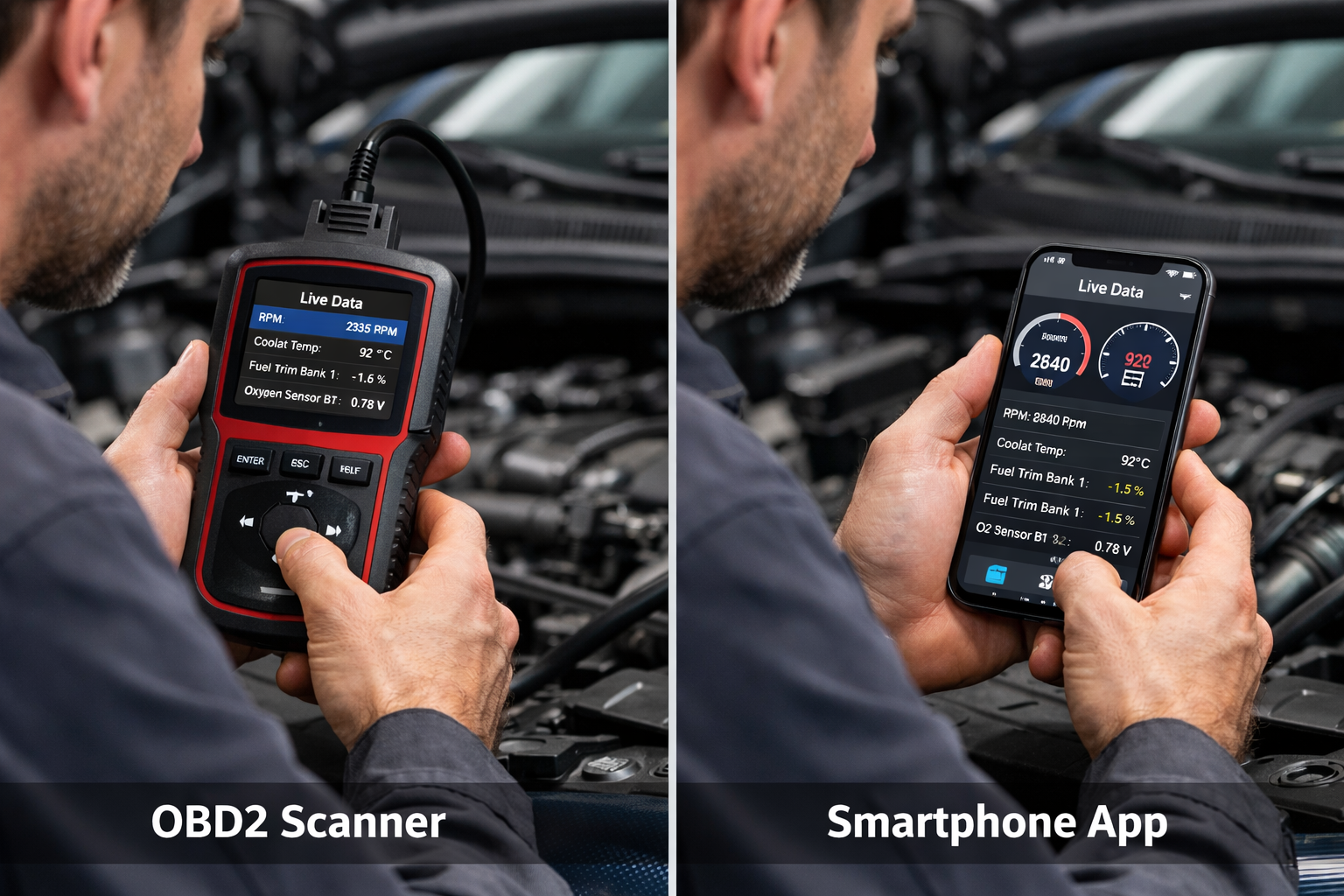
App vs Handheld: The Trade-offs
Smartphone apps paired with Bluetooth adapters offer excellent value and familiar interfaces. The Amtifo B25 Bluetooth scanner exemplifies this approach… compact hardware with comprehensive software capabilities.
Handheld units like the Foxwell NT301 provide dedicated functionality without smartphone dependency. Workshop-proven reliability matters when you’re diagnosing faults in less-than-ideal conditions.
Key considerations:
- Battery life: Handhelds typically last longer during extended diagnostic sessions
- Screen visibility: Dedicated units often perform better in bright workshop conditions
- Update process: Apps update automatically; handhelds may require manual firmware updates
- Durability: Purpose-built scanners handle workshop environments better than smartphones
The Shortlist: Best OBD2 Scanners for Home Mechanics
1. Foxwell NT726 – Professional All-Systems Scanner
Who it’s for: Serious home mechanics wanting comprehensive diagnostic capability across all vehicle systems.
Top features:
- Full system coverage including ABS, SRS, transmission, and TPMS
- Bidirectional controls for component testing
- Regular software updates via WiFi
- 7-inch tablet interface with intuitive navigation
Limitations: Higher price point and complexity may overwhelm casual users.
Price band: £300-400
The NT726 delivers professional-grade functionality that rivals dealer-level equipment. Its bidirectional capability allows active testing of components… cycling ABS pumps, commanding cooling fans, or performing DPF regeneration cycles.
2. Launch CRP123X Elite – Live Data Specialist
Who it’s for: Diagnostic enthusiasts who need detailed real-time monitoring and graphing capabilities.
Top features:
- Advanced live data graphing with multiple parameter display
- Four-system coverage (engine, transmission, ABS, SRS)
- AutoVIN technology for automatic vehicle identification
- Comprehensive fault code database with repair suggestions
Limitations: Limited to four main systems; no TPMS or specialized module support.
Price band: £150-200
The CRP123X excels at data visualisation, making it easier to spot patterns in sensor readings that indicate developing faults.
3. Ancel VD500 – European Vehicle Specialist
Who it’s for: Owners of European vehicles requiring enhanced diagnostic protocols and system coverage.
Top features:
- Enhanced European vehicle support including VAG, BMW, Mercedes protocols
- Oil service reset and EPB functions
- Battery test capability
- Multilingual interface support
Limitations: Less comprehensive than full professional scanners; focused on European makes.
Price band: £80-120
The VD500 bridges the gap between basic code readers and professional tools, offering enhanced functionality for European vehicles at a reasonable price point.
4. Foxwell NT301 Plus – Enhanced Basic Scanner
Who it’s for: Beginners wanting more than basic code reading without overwhelming complexity.
Top features:
- Clear fault code explanations in plain English
- Battery test function integrated
- Smog test readiness verification
- Compact handheld design with intuitive button layout
Limitations: Limited to engine system diagnostics; no ABS or transmission coverage.
Price band: £60-80
The NT301 Plus combines simplicity with usefulness, making it an excellent entry point for home mechanics building their diagnostic toolkit.
5. XTOOL D7 – Wireless Professional Scanner
Who it’s for: Tech-savvy mechanics preferring wireless operation with professional capabilities.
Top features:
- Wireless connectivity via WiFi
- Comprehensive system coverage including TPMS and IMMO
- Regular online updates
- Compact tablet form factor
Limitations: Requires stable WiFi connection for full functionality; higher learning curve.
Price band: £250-350
The D7 represents the evolution of diagnostic tools toward wireless, connected operation while maintaining professional diagnostic depth.
6. Ancel AD610 Pro – ABS and SRS Specialist
Who it’s for: Home mechanics specifically needing brake and airbag system diagnostics.
Top features:
- Dedicated ABS and SRS system coverage
- Brake bleeding assistance functions
- Clear safety system fault identification
- Affordable specialised capability
Limitations: Focused functionality; doesn’t replace comprehensive scanner for other systems.
Price band: £100-150
The AD610 Pro fills a specific niche for safety system diagnostics that basic scanners can’t access.
7. Launch Creader Elite – Balanced Performance
Who it’s for: Mechanics seeking solid all-round performance without premium pricing.
Top features:
- Four-system diagnostic coverage
- Oil reset and EPB functions
- Decent live data capability
- Proven reliability in workshop conditions
Limitations: Interface feels dated compared to newer tablet-style units.
Price band: £120-180
The Creader Elite offers dependable performance that’s stood the test of time in professional workshops.
Common Mistakes When Buying an OBD2 Scanner
Assuming all scanners work with all vehicles. Protocol compatibility varies significantly, especially with older European vehicles. Always verify specific make and model support before purchasing.
Buying based on price alone. The cheapest scanner might read basic codes, but won’t help diagnose complex intermittent faults that require live data analysis.
Overlooking update requirements. Automotive technology evolves rapidly. Scanners without regular updates become obsolete as new vehicle systems emerge.
Ignoring your actual needs. If you only need code reads and live data, don’t pay for bidirectional controls you’ll never use. Conversely, don’t buy a basic scanner if you plan to work on multiple vehicle systems.
Forgetting about support and documentation. Technical specs matter, but so does having access to clear instructions and responsive customer support when you encounter unfamiliar fault codes.
Frequently Asked Questions
Q: Can I use any OBD2 scanner on my 2015 BMW?
A: Most universal scanners will read basic engine codes, but BMW-specific functions may require enhanced protocols. Check the scanner’s compatibility list for your specific model.
Q: Do I need a professional scanner for basic maintenance?
A: For oil changes and basic servicing, no. But for diagnosing check engine lights or preparing for MOT tests, a capable scanner saves time and money.
Q: How often do scanners need updates?
A: Depends on the manufacturer. Quality scanners typically receive updates quarterly or bi-annually. Some offer automatic updates, others require manual installation.
Q: Can OBD2 scanners damage my car’s computer?
A: Properly designed scanners are read-only for basic functions and won’t cause damage. Bidirectional scanners can command systems, so following instructions is essential.
Making the Right Choice for Your Workshop
Selecting the best OBD2 scanners for home mechanics depends on matching tool capabilities to your actual diagnostic needs. The Foxwell NT726 delivers professional-grade functionality for serious enthusiasts, while the Ancel AD410 Pro provides solid basic capability at budget-friendly pricing.
Remember that diagnostic capability extends beyond reading fault codes. Live data analysis, system-specific functions, and regular updates transform these tools from simple code readers into proper diagnostic solutions. The engineering behind modern vehicle systems demands tools that can keep pace with increasing complexity.
For comprehensive guidance on choosing between different scanner categories, explore our detailed comparison of diagnostic tools. Whether you’re building your first diagnostic toolkit or upgrading existing equipment, the right scanner investment pays dividends through faster fault identification and reduced dependency on expensive garage diagnostics.
Diagnostic tech keeps changing. That part’s obvious. But the thing that never changes? Actually knowing what’s going on inside your vehicle’s systems will always beat guessing. Pick tools that can keep up as your skills get sharper, and that give you the technical detail your projects actually need.